
Authoritarian Conservatism
Current that preserves order, tradition, and hierarchy through a strong state, restricting freedoms and political participation in the name of social stability, morality, religion, and established authority.
Home / Ideologies / Authoritarian Conservatism
Current that preserves order, tradition, and hierarchy through a strong state, restricting freedoms and political participation in the name of social stability, morality, religion, and established authority.
In one sentence
I want a hierarchical order sustained by a strong state, protecting tradition, religion and customs against moral subversion.
Political axes

Our Authoritarian Conservatism definition includes “hierarchical order sustained by a strong state, protecting tradition, religion and customs against moral subversion”. This clause must be read for which central institutions it retains or rejects; opposition to a state or party is not endorsement of centralized territorial power.

Our Authoritarian Conservatism definition includes “hierarchy through a strong state, restricting freedoms and political participation in the name of social stability, morality, religion”. The definition identifies popular authorization or a republican institution; the precise franchise and decision procedure remain separate questions.

Our Authoritarian Conservatism definition includes “hierarchy through a strong state, restricting freedoms and political participation in the name of social stability, morality, religion”. Compulsion, surveillance or enforced discipline is relevant to the security side independently of election rules.

Our Authoritarian Conservatism model centers on hierarchical order sustained by a strong state, protecting tradition, religion and customs against moral subversion. That core does not specify minority membership, migration and the coexistence of cultural identities. Shared economic interests or a universal philosophical ethic do not alone specify immigration or cultural-integration policy.
Our Authoritarian Conservatism model centers on hierarchical order sustained by a strong state, protecting tradition, religion and customs against moral subversion. That core does not specify the political role of organized armed force and acceptance of war. Domestic coercion, economic state intervention and national pride do not by themselves establish militarism or pacifism.
Our Authoritarian Conservatism model centers on hierarchical order sustained by a strong state, protecting tradition, religion and customs against moral subversion. That core does not specify coercive foreign projection into other peoples or states. This axis concerns foreign intervention, not nationalism, domestic regulation, cultural confidence or military preparedness alone.

Our Authoritarian Conservatism model centers on hierarchical order sustained by a strong state, protecting tradition, religion and customs against moral subversion. That core does not specify ownership of productive assets, land and enterprises. Welfare spending, moral solidarity and expert administration do not by themselves abolish or privatize productive ownership.

Our Authoritarian Conservatism model centers on hierarchical order sustained by a strong state, protecting tradition, religion and customs against moral subversion. That core does not specify how production and allocation are coordinated through plans or decentralized exchange. Public ownership can coexist with markets, and private firms can operate under directed planning.

Our Authoritarian Conservatism model centers on hierarchical order sustained by a strong state, protecting tradition, religion and customs against moral subversion. That core does not specify cross-border trade, capital flows and economic integration. Domestic market freedom and international cultural solidarity are different claims from a free-trade policy.

Tradition, community or religion supplies public moral context in this selected model, while market and democratic commitments differ across the named currents.

Our Authoritarian Conservatism model centers on hierarchical order sustained by a strong state, protecting tradition, religion and customs against moral subversion. That core does not specify public attitudes toward inherited customs, family, gender and social change. Economic redistribution, technological novelty and a religious affiliation do not uniquely determine every moral position.


Our Authoritarian Conservatism model centers on hierarchical order sustained by a strong state, protecting tradition, religion and customs against moral subversion. That core does not specify the priority given to technological transformation versus ecological or bodily limits. Historical age, rural life and scientific reasoning do not by themselves establish acceptance or rejection of all technology.
Leans further toward religious governance than 94% of the 250 ideologies in the catalog.
Of all the axes, Religion in governance is where it stands furthest from the rest.
On Technology, it sits practically at the catalog median.
Here it shares common ground with most ideologies.

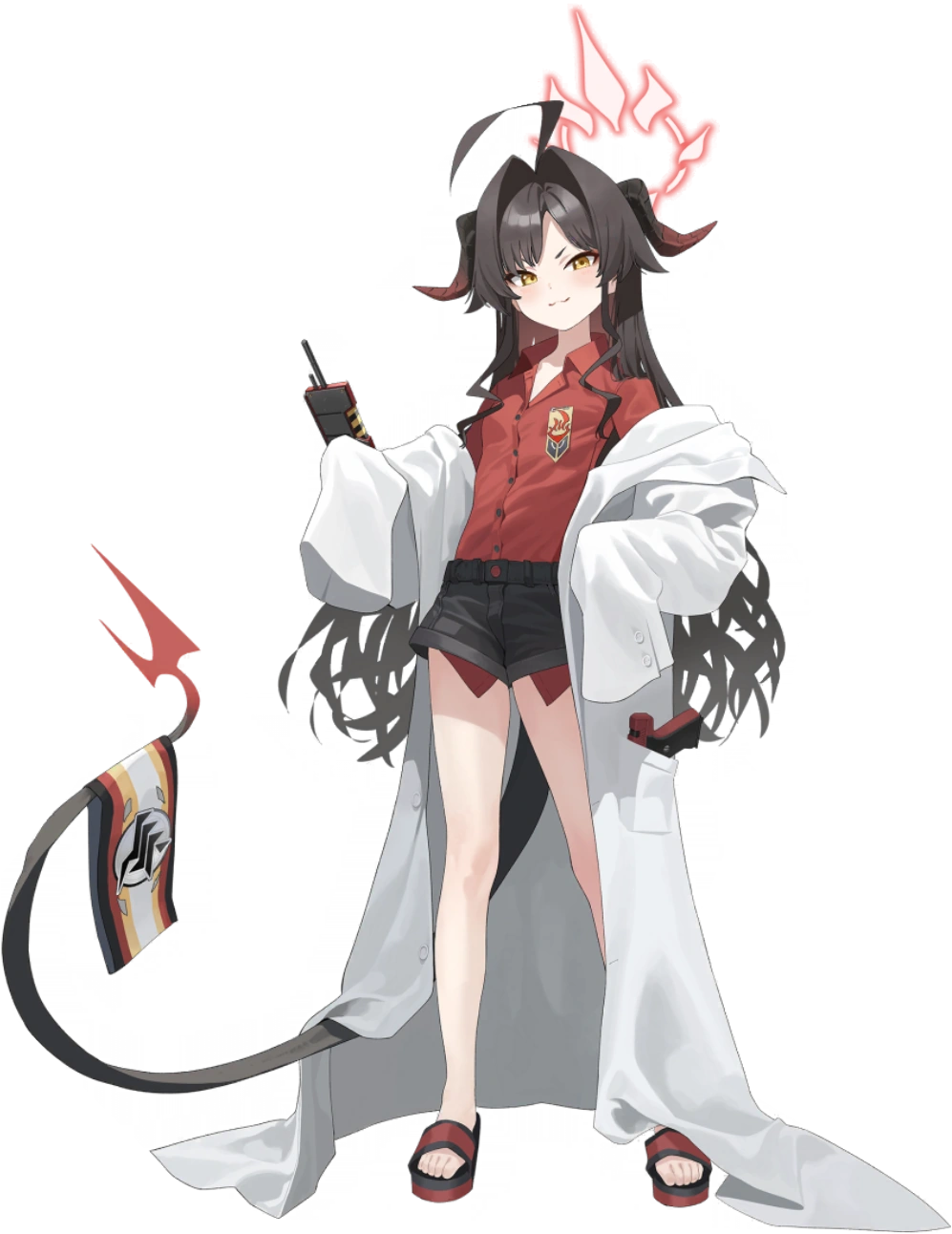
Shiranui Kaya heads the General Student Council's Defense Office and plots to replace Rin with stronger personal rule. Her alliance with Kaiser and use of armed support lead to a failed takeover whose consequences expose the gap between her ambitions and her ability to govern.
Closest, by dimension



Other compatible profiles







The most distant

A special-response academy whose elite students carried out dangerous operations under the General Student Council President's authority. After its closure, the FOX and RABBIT squads pursue different ways of securing their future.
Also close, by dimension

The most distant
Ideological proximity
Closest within Far-Right
Project that seeks to organize state and society according to the strict interpretation of a religious doctrine, subordinating laws, customs, and politics to sacred precepts and rejecting modern secularism.
Conception that defines the nation by common origin, language, and ancestry, advocating a state of the dominant ethnicity and the preservation of its identity, with a tendency to exclude minorities and immigrants from the national body.
Defense of monarchy with unlimited power concentrated in the sovereign, legitimized by tradition or divine right, without a constitution or parliament to restrict the king's authority over state and society.
Closest in other spectrums
Nationalist and syndicalist current that rejects liberalism and Marxism, advocating national unity, corporatist organization of labor, authoritarian social justice, and popular mobilization around the state.
Authoritarian nationalist movement that emerged in 1930s Brazil, with a Christian and corporatist base, the motto God, Fatherland and Family, mass aesthetics, and frontal opposition to liberalism and communism.
Theory by Aleksandr Dugin that rejects liberalism, communism, and fascism and proposes a multipolar world founded on civilizations, tradition, and collective identity, opposing globalism and Western hegemony.
The most distant ideology
Crypto-AnarchismLibertarian23%